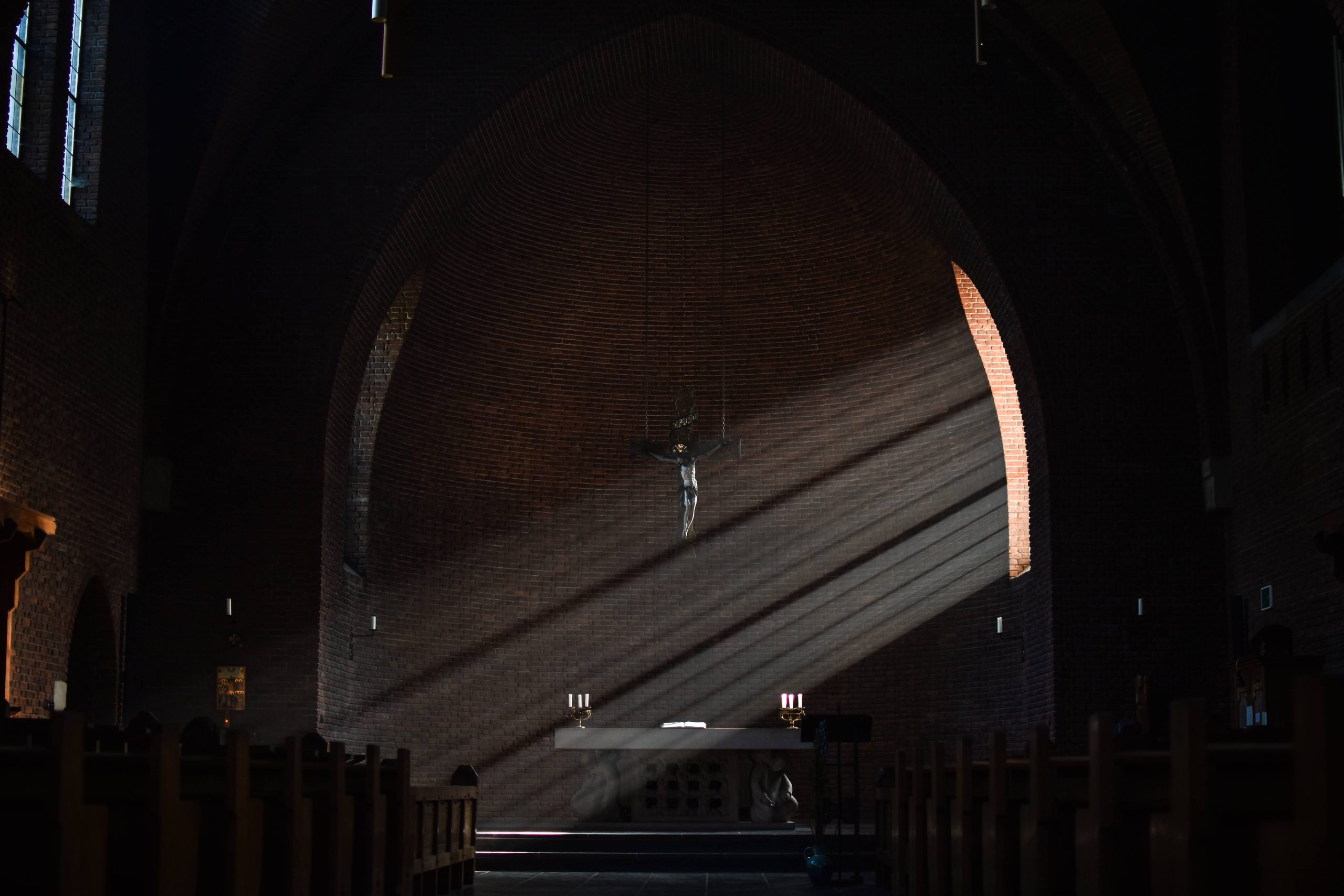
On a grey day in March 2013, I made a two-hour journey by train and bus to the far southern corner of the Netherlands. It was the first time I would spend a couple of days in a monastery.
The Benedictine Abbey of Vaals looked like a fort, strategically situated on the edge of a forest, overlooking the rolling landscape. Once I entered through the low wooden door in the high brick wall, I knew I was in a different time zone.
The monastic rhythm of prayer (in Latin no less!) and stretches of time in between helped me to reorient myself. I soon realised I needed to forget all the questions I had come with. Perhaps I received answers I wasn’t looking for.
When I left a few days later, I knew I would return. I never did, but I have visited other monasteries since, including in Belgium, Austria and Poland.
Monasteries in early Christian Europe
Monasticism emerged in Egypt when Saint Antony (251-356) left the city behind and retreated into the desert. Soon others followed him and communities formed. St. Antony did not write a monastic Rule, but his biography (the Life) became influential.
A century later, it inspired Saint Augustine (354-430), who would eventually write his rule around the year 400. It helped the brothers who lived together in a monastic community in his house in Thagaste, in present-day Algeria.
Saint Benedict (480-547) undoubtedly knew about his predesessors when he wrote his own Regula for the communities which he started in Italy. It contains 73 short chapters which deal both with the spiritual life of the monastics and with administrative issues facing religious communities. This rule is still read on a daily basis during meals in Benedictine monasteries. Saint Benedict did not know this in 530, but the Regula Sancti Benedicti would become the most influential monastic document in Western Europe.
Everybody knows about ‘ora et labora’. The phrase isn’t used in the rule, but it serves as a summary of the ethos of this ‘school for the Lord’s service‘. The monks will dedicate themselves to prayer, study and work.
oratory + laboratory
Last week (September 2026) I visited an Abbey on the North Sea Coast. We were with a small group of international guests, and we lived for a couple of days with the monastic rhythm of prayer and (our own) work. It occurred to me that the counterpart of ‘oratory‘ (= house of prayer) is, perhaps, ‘laboratory‘.
What is an Oratory? A monastery is a house of prayer in which the day starts with the one-hour-long service in which we pray six Psalms. In a missions context, the term ‘oratory‘ is sometimes used for a group of people who pray together with the hope, or expectation, that this group will grow into a larger community or parish.
But Saint Benedict’s followers also work; they labour. ‘Work’ sounds like toil, hard labour; and it is that at times. But the work of hospitality and learning also is a craft requiring wisdom and creativity.
In the history of Western Europe, these labour-atories, these houses of work (for the Lord), played a crucial role in the development of universities and hospitals. How can the monks inspire us today with their houses of learning and hospitality? How might we establish new laboratories for the common good?
Another Benedictine Moment?
Since my first visit to the Abbey in Vaals in 2013, monasteries have become an increasingly popular destination for all sorts of spiritual seekers. A lot has already been written about the appeal of monasteries, but for me two things stand out:
- hallowing time and space. The work of the monks, prayer and labour, happens in a confined space, the clausura. Time is divided by prayers as set out in the Rule. Be where you are, do what you do. This focused embodiment helps the monks to be really present in the here and now, though always explicitly in the perspective of heaven. This contrasts sharply with life as I experience it, in which time only speeds up, and in which space does not anchor me. Holy time and sanctified space is what I find in a monastery.
- pilgrimage and the journey of faith. Historically, one of the important ministries of the monastery is to provide hospitality to pilgrims. If you experience your life as a journey, you need a place where you can recharge every so often. Intertwined with the pilgrimage of life is the journey of faith. My faith is not what it was 15 years ago. Like the disciples on their way to Emmaus, I have changed my perspective on what I believe about God and myself. For many people, myself included, this happens in monasteries, which embody the metaphors of pilgrimage and journeying.
It seems to me that another, undoubtedly very different, emergence of monastic communities will play an important role in the future of Christianity in Europe. I am collecting examples of such places; which (neo-)monastic places inspire you, could you let me know? Thank you!
As part of our ministry with the Reformed Episcopal Board of Foreign Mission, I have been thinking about how historical examples can inspire us today. Support our work here.
[Cross-posted from Europe At Midnight.]